



Introduction
In today’s fast-paced commercial world, businesses can’t afford to stay stuck in outdated systems or inefficient processes. Markets evolve, technology accelerates, and customer expectations shift almost overnight. That’s where strategic transition planning becomes critical. Companies that succeed aren’t necessarily the biggest; they’re the ones willing to adapt, refine, and upgrade.
- Introduction
- The Importance of Strategic Business Alignment
- Building Scalable Operational Frameworks
- Leadership Development and Organizational Culture
- Digital Transformation and Technological Integration
- Financial Planning and Risk Management
- Customer Experience and Market Positioning
- Measuring Performance and Continuous Improvement
- Summary Table
- FAQs
- Conclusion
uptheswitchllc represents a modern approach to business transformation. Rather than offering one-size-fits-all solutions, it focuses on structured growth, operational clarity, and sustainable performance improvements. Whether an organization is launching a new product, scaling operations, or undergoing digital change, strategic alignment plays a crucial role in long-term success.
In this article, we’ll explore the core pillars of structured transformation, operational development, leadership alignment, and scalable frameworks. Each section dives into practical insights that businesses can apply to remain competitive, resilient, and growth-focused in an increasingly complex marketplace.
The Importance of Strategic Business Alignment

Strategic alignment is the backbone of sustainable growth. Without clear direction, even the most talented teams can drift into inefficiency. Organizations often face a disconnect between leadership vision and daily operations. When departments move in different directions, productivity suffers and goals become blurred.
A structured approach ensures that objectives, processes, and performance metrics are synchronized. This involves defining long-term goals, mapping measurable milestones, and assigning clear accountability. Alignment also reduces wasted resources, which can significantly impact profitability.
Communication plays a central role here. When employees understand not just what they are doing but why they are doing it, engagement improves. Teams become proactive rather than reactive.
Modern transformation initiatives emphasize clarity. Businesses that invest in alignment early experience smoother transitions, fewer disruptions, and stronger cultural cohesion. It’s not about dramatic overnight change. It’s about consistent, intentional refinement that builds momentum over time.
Building Scalable Operational Frameworks

Operational scalability determines whether a company can handle growth without chaos. Many organizations grow rapidly but struggle behind the scenes due to fragile systems. When workflows are unclear or manual processes dominate, expansion becomes risky.
A scalable framework includes standardized procedures, bestshoesevershop email confirmation, and clearly documented processes. It allows businesses to increase output without proportionally increasing costs. This is where structured system audits become valuable. By identifying bottlenecks, redundancies, and inefficiencies, companies can redesign workflows for performance optimization.
Technology integration also matters. Automation software, data analytics platforms, and centralized communication tools streamline coordination. Instead of patching problems as they arise, businesses can proactively build systems that adapt.
Long-term sustainability requires measurable metrics. Performance dashboards, KPIs, and reporting cycles ensure visibility into operations. When companies design processes with growth in mind, scaling becomes less stressful and far more strategic.
Leadership Development and Organizational Culture
Change initiatives often fail not because of poor planning, but because of weak leadership alignment. Leaders set the tone for transformation. If executives resist innovation or lack clarity, teams mirror that uncertainty.
Effective leadership development focuses on adaptability, emotional intelligence, and strategic foresight. Training programs that encourage transparent communication and collaborative decision-making strengthen internal trust.
Organizational culture, meanwhile, determines how employees respond to change. A rigid environment may resist modernization, while a growth-oriented culture embraces improvement. Leaders must create safe spaces for feedback and experimentation.
Investing in professional development increases resilience. Employees who feel supported are more likely to innovate and contribute solutions. Culture isn’t built through slogans; it’s shaped by daily behaviors and shared accountability.
When leadership and culture align with strategic objectives, transformation becomes a shared journey rather than a forced initiative.
Digital Transformation and Technological Integration
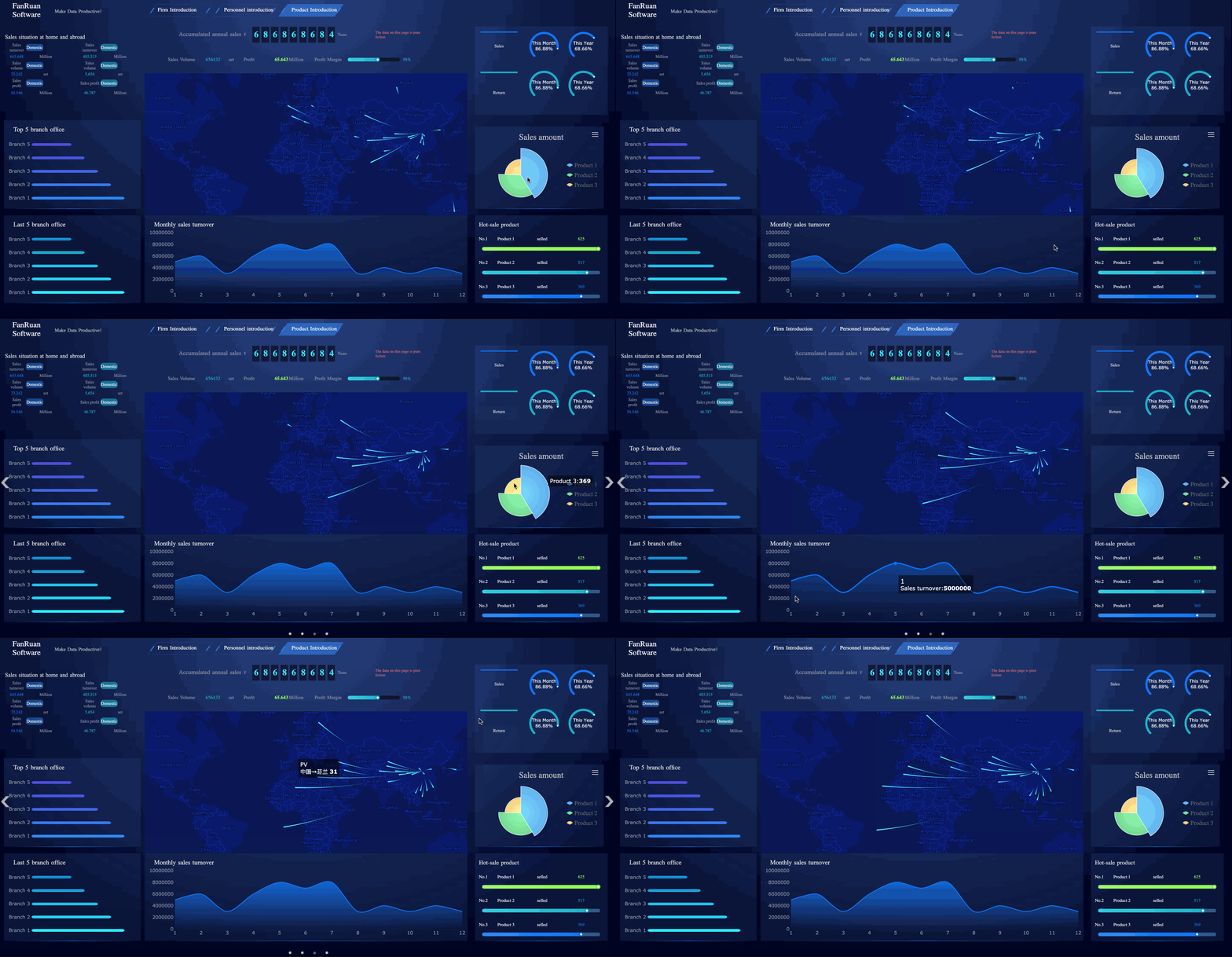
Digital transformation is more than adopting new software. It’s about redefining how a business operates through technology. Organizations that hesitate often fall behind competitors who prioritize innovation.
Cloud infrastructure, customer relationship management systems, and data analytics tools improve efficiency and insight. However, successful integration requires structured implementation plans. Without proper onboarding and employee training, technology investments may underperform.
Cybersecurity considerations also matter. As companies digitize operations, protecting sensitive data becomes essential. A comprehensive technology strategy includes risk assessments, secure infrastructure, and ongoing system updates.
Digital change should enhance—not complicate—workflows. The key lies in selecting tools that complement operational goals rather than overwhelm teams.
Businesses that treat technology as a strategic asset rather than a quick fix position themselves for long-term agility and smarter decision-making.
Financial Planning and Risk Management

Sustainable growth requires careful financial planning. Expansion without budgeting clarity can create cash flow challenges. Strategic transitions often demand investment in training, technology, and process redesign.
Financial forecasting models help anticipate expenses and potential revenue fluctuations. Scenario planning allows organizations to prepare for market uncertainties. Risk management frameworks identify vulnerabilities before they escalate into crises.
Diversification strategies also play a role in stability. Businesses that rely heavily on a single revenue stream may face greater risk during economic shifts. By broadening service offerings or customer segments, companies improve resilience.
Regular financial reviews ensure alignment with broader strategic objectives. Transparent reporting fosters accountability at every level.
When financial planning is proactive rather than reactive, companies navigate transitions with confidence instead of hesitation.
Customer Experience and Market Positioning
Customer expectations are evolving rapidly. Businesses that fail to adapt risk losing loyalty. Market positioning must reflect current trends, digital engagement preferences, and competitive analysis.
Understanding the customer journey is essential. From initial awareness to post-purchase engagement, every touchpoint influences perception. Data-driven insights allow companies to refine messaging, personalize interactions, and improve satisfaction.
Brand positioning should communicate value clearly. Companies must articulate what differentiates them in crowded markets. Consistent messaging builds trust and recognition.
Feedback loops, surveys, and analytics tools provide measurable insight into customer behavior. Continuous refinement ensures relevance.
By aligning operations and branding with customer needs, businesses strengthen their competitive advantage and foster long-term relationships.
Measuring Performance and Continuous Improvement

Transformation isn’t a one-time event. It’s an ongoing process. Measuring progress ensures that initiatives deliver tangible outcomes.
Key performance indicators provide quantifiable benchmarks. These may include revenue growth, operational efficiency rates, employee engagement metrics, or customer satisfaction scores. Consistent monitoring allows for early detection of inefficiencies.
Continuous improvement frameworks encourage incremental enhancements. Rather than waiting for major disruptions, companies refine systems regularly. Feedback from employees and clients plays a valuable role in this process.
Performance reviews should remain constructive rather than punitive. The goal is optimization, not blame.
Organizations that prioritize evaluation and adaptation maintain momentum. By embracing measurable accountability, businesses evolve steadily and sustainably.
Summary Table
| Core Focus Area | Key Benefit | Long-Term Impact |
|---|---|---|
| Strategic Alignment | Clear objectives | Sustainable direction |
| Operational Frameworks | Efficient workflows | Scalable growth |
| Leadership Development | Stronger culture | Resilient teams |
| Digital Integration | Improved efficiency | Competitive agility |
| Financial Planning | Risk mitigation | Stability |
| Customer Positioning | Brand clarity | Market strength |
| Performance Metrics | Measurable results | Continuous improvement |
FAQs
1. What type of businesses benefit most from structured transformation strategies?
Companies experiencing growth, operational inefficiencies, or digital shifts benefit significantly from structured planning frameworks.
2. How long does a transformation initiative typically take?
Timelines vary based on organizational size and complexity, but phased approaches often yield sustainable results over months rather than weeks.
3. Is technology always required for operational improvement?
Not always. While digital tools enhance efficiency, process clarity and leadership alignment remain foundational.
4. How can companies reduce risk during major transitions?
Through financial forecasting, scenario planning, and proactive communication strategies.
5. Why is leadership alignment so critical?
Leaders influence organizational culture. Clear, consistent direction ensures smoother implementation of new strategies.
Conclusion
Modern businesses operate in an environment defined by rapid change. Success depends on more than ambition—it requires structure, clarity, and adaptability. uptheswitchllc symbolizes a forward-thinking approach to strategic growth, operational refinement, and sustainable development.
From leadership alignment to digital integration, every element plays a role in long-term resilience. Organizations that embrace continuous improvement rather than reactive fixes position themselves for consistent progress.
Transformation doesn’t have to feel overwhelming. With clear frameworks, measurable objectives, and collaborative leadership, businesses can evolve confidently. The future belongs to those willing to refine, adapt, and build systems designed not just for today—but for tomorrow.